
Knowing how to move furniture during bad weather comes down to three things: judging when the weather is actually unsafe, keeping water away from anything porous, and loading in an order that limits how long each piece sits in the open. Light rain is a packing problem you can solve with plastic, blankets and a good staging area. Lightning and severe weather warnings are a safety problem, and the right answer is to wait.
Fall in Alabama brings both kinds of days. Afternoon thunderstorms still roll through in September and October, the Atlantic hurricane season runs from June 1 to November 30 according to NOAA’s Climate Prediction Center, and the National Weather Service in Birmingham notes a secondary severe weather season that typically runs from the beginning of November until mid December. If your move lands in that window, plan for weather rather than hoping around it.
When to Reschedule and When to Keep Moving
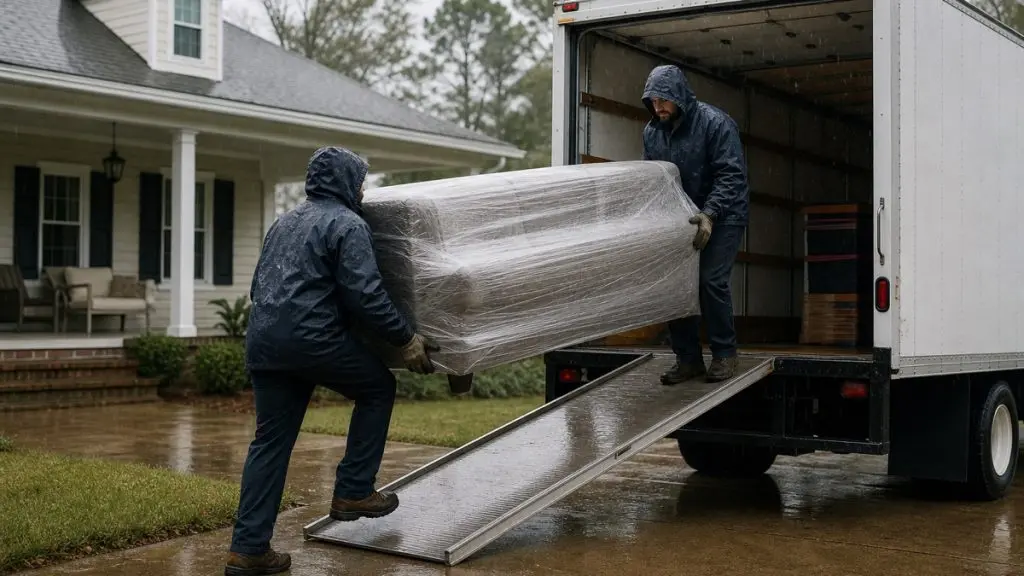
Keep moving through drizzle, steady light rain, heat and cold. Stop when you hear thunder. The National Weather Service guidance is to stay indoors until 30 minutes after the last clap of thunder, and the same page lists carports and porches as unsafe shelter. A truck ramp and an open driveway are exactly where a crew should not be during a storm.
Watches and warnings mean different things. A severe thunderstorm watch means storms are possible, so stay informed and be ready to act. A warning means severe weather has been reported or indicated by radar and there is imminent danger to life and property. Under a watch, a move can usually start with a plan to pause. Under a warning, or with a tropical system forecast to reach central Alabama, call your mover and pick a new date.
What to check the night before
Look at the hourly forecast, not the daily icon. A rain chance on the daily forecast may really be a few hours of afternoon storms, and if so, load the most water sensitive items in the morning. Check the forecast for both addresses, since a move from Sylacauga to Auburn can start dry and end wet.
How to Move Furniture During Bad Weather, Step by Step
Most weather damage on moving day happens in the short trips between the door and the truck, so the goal is to shorten those trips and make every piece waterproof before it goes outside. This order works for rain, and most of it applies to heat and cold too.
- Set up a staging area. Clear a garage, carport or the room nearest the door. Wrap everything there, out of the weather, so nothing gets wrapped on the driveway.
- Protect the floors. Lay floor runners, flattened boxes or old towels from the staging area to the door at both homes. Put a mat outside the door so wet shoes get wiped before they reach hardwood or carpet.
- Wrap in two layers. Use a moving blanket against the finish, then stretch wrap over it. The blanket prevents scratches and the plastic keeps water out.
- Bag mattresses and box springs. Sealed mattress bags keep water out, and a wet mattress is very hard to dry all the way through.
- Seal boxes and lift them off the floor. Tape every seam, and keep boxes on a dolly or furniture pads rather than on wet concrete.
- Load the most sensitive items when it is driest. Mattresses, upholstered pieces, electronics and paperwork go in during the best weather window and deep in the truck, away from the door.
- Close the truck between trips. Pull the door down whenever nobody is loading, especially during a downpour.
- Unload in reverse. At the new home, stage everything in one dry room first, then unwrap and place pieces once the rain lets up.
Protecting Furniture, Mattresses and Electronics When Moving in the Rain
Different materials fail in different ways, so wrap based on what the piece is made of. Moving in the rain is manageable when the absorbent items never touch water at all.
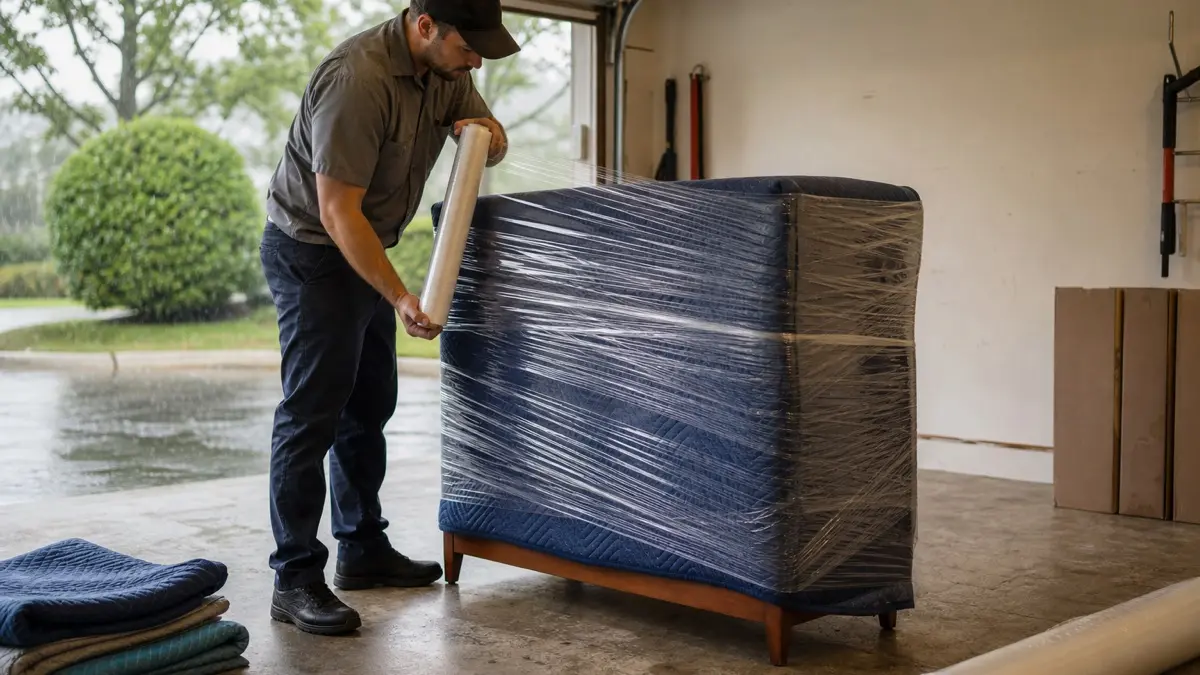
Wood furniture can swell, stain or lose its finish if water sits on it. Wrap dressers, tables and headboards in a blanket first, then plastic, and wipe any drops off right away. Taking legs off tables and removing bed rails also makes pieces smaller and faster to carry.
Upholstered sofas, chairs and mattresses absorb water and hold it. These pieces need full plastic coverage with no gaps at the bottom, because water splashing up from a wet driveway gets in just as easily as rain from above.
Electronics should stay in their original boxes when possible, or be wrapped in blankets and sealed in plastic. Our moving FAQs note that flat screen TVs are susceptible to damage from temperature variations and slight bumps, so let a TV sit indoors and reach room temperature before you plug it in, particularly after a cold or humid trip.
Paperwork, photos and documents belong in lidded plastic bins, not cardboard. Keep birth certificates, closing papers and passports in a bin that rides in your car instead of the truck.
Heat and cold need their own precautions
On hot, humid days, the risk shifts to people and to heat sensitive items. Candles, vinyl records, medications and aerosol cans should ride in an air conditioned car. Schedule the heaviest lifting for the morning and keep water available for everyone carrying furniture.
In cold weather, wood, leather and electronics can pick up condensation when they move from a cold truck into a warm house. Leave wrapped items covered for a while after unloading so they warm up gradually.
Drying and Inspecting Items After a Wet Move
A frequent mistake after moving in the rain is leaving damp items wrapped. Plastic keeps water out, but it also traps any water that got in. Unwrap everything the same day, wipe down surfaces and set damp pieces in a room with airflow.
Timing matters here. The EPA advises that water damaged items should be dried within 24 to 48 hours to prevent mold growth. Use fans or a dehumidifier on damp upholstery, open damp boxes and spread the contents out, and check the undersides of furniture and the bottoms of mattresses where water tends to collect.
Look for water marks, lifted veneer and swollen particleboard before you sign off on delivery. If something was damaged, photograph it right away. Standard mover liability covers not more than $0.60 per pound, so review your coverage before moving day if you own heavy or valuable pieces.
How Move Gurus Crews Handle a Wet Moving Day
Our crews bring the gear that makes bad weather moves go faster. Every truck carries tools, and furniture assembly and disassembly are included at no extra charge, so beds, tables and sectionals come apart into smaller pieces that are quicker to wrap and carry between showers. Non breakable items can stay in dresser drawers because movers shrink wrap the drawers closed.
All of our trucks are 16 ft, which fits tight driveways and steep hills and lets the crew back up closer to your door. That shortens the distance each piece travels in the open. If you want everything wrapped and boxed before the crew arrives, our professional packing services cover it.
Because moves are billed hourly (for example, 2 movers and one 16 ft truck at $155 per hour with a 2 hour minimum), a staged, pre wrapped home saves real money when weather slows the pace.
Frequently Asked Questions
Will movers work in the rain?
Most movers work through normal rain and pause for lightning or severe weather warnings. Ask your mover what their plan is for storms before moving day.
Is it better to reschedule a move for rain?
Not usually. Light rain is manageable with plastic, blankets and a staging area. Reschedule for severe weather warnings, lightning that will not clear, or a tropical system in the forecast.
What should I never load in the rain?
Avoid loading unprotected mattresses, upholstered furniture, electronics and paper documents. Wrap them fully or wait for a break in the weather.
Plan Your Fall Move With a Local Crew
If you are still deciding how to move furniture during bad weather this fall, a crew that already knows Alabama weather makes the day easier. Move Gurus is family owned, started in Birmingham, and serves Alabaster, Calera, Sylacauga, Auburn, Florence and the greater Birmingham area with residential moving services built around careful wrapping and loading. Request a quote for your move to talk through your date and forecast with our team.